






Halloween is Over, give your pumpkins a Last Hoorah
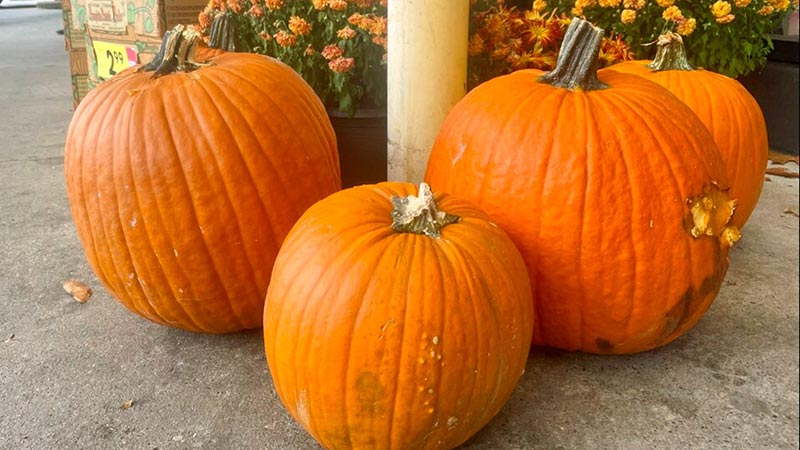
Credit: AP – Pumpkins for sale are displayed on Monday, Oct. 31, 2022, at a grocery store in Cross Lanes, W.Va. (AP Photo/John Raby)
by: Krys Shahin
WUSA9 Oct. 30, 2025

SAN FRANCISCO — Have leftover pumpkins, gourds and other natural decorations from the holiday season? Instead of throwing them out, here are alternative ways to recycle the decor.
There are many ways to get rid of these nutrient dense decorations that don’t require them ending up in a landfill.
From dropping things off at a local farm for critters to snack on to turning it into soil for your yard, there are many options available across the country.
Ways to recycle pumpkins, gourds and more
Donate
Consider that pumpkin as a meal for a host of animals at a local farm, zoo or sanctuary. The nonprofit Pumpkins for Pigs connects communities to local farmers, providing a way to get farm animals treats and take pumpkins and other items off your hands.
While not every farm on their list accepts these items, many may consider accepting: unpainted carved or uncarved pumpkins, gourds, fruits, vegetables, brewer’s grains, bread, pastries, corn stalks, hay, straw, Christmas trees and wreaths free of decorations, dyes, and sprays, according to the website.
Rickee Miller from Hoffner Hill Farm LLC in Pennsylvania said her critters, consisting of highland cattle; high park cattle; pigs; goats; horses and hens, are happy to recycle for you.
“They sort of play with them throughout the day and eat them up,” she said. “The critters like all that and its good for them.”
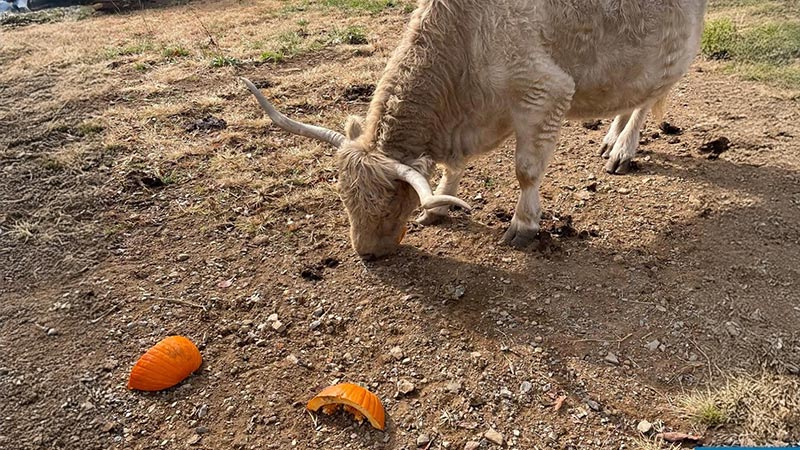
Credit: Rickee Miller
Animals at farms, in zoos and other sanctuaries enjoy pumpkin as a healthy treat. It’s a nutrient dense, low-calorie food, which is also high in fiber and mostly made up of water.
“Due to their tough exteriors, they are often used for mental enrichment for animals, including zoo animals like elephants and bears,” nonprofit founder Jennifer Seifert wrote in an email.
Pumpkin and some other gourds are also a safe treat for dogs and cats, if you don’t feed them raw pumpkin seeds or stems, according to the Animal Humane Society.
Here’s a full interactive map of places that accept donations of uncarved, undecorated pumpkins in 45 states across the country.
Homeowners also may consider feeding the wildlife that hang out in their neighborhoods, especially when those old pumpkins are offered with other fruit. Salvaged pumpkin seeds are a tasty treat for a wide variety of birds such as cardinals, sparrows, finches and chickadees, including when mixed with other seeds such as sunflowers.
Pumpkins for Pigs does not recommend throwing pumpkins into the woods.
“We love the wild animals too, and we want to keep them wild — living and subsisting in their natural habitats, not becoming dependent on humans,” Seifert wrote in an email.
Make sure not to feed rotting or painted pumpkins to wildlife. Ensure there are no other additives like glitter, sealer, spray paint, crayons, etc.
Here are a few suggestions on how to decorate pumpkins so they’re safe for animals to eat after the holiday.
Recycle
Local government agencies, cities, counties and communities across the country will accept pumpkins and other materials for composting and recycling. Some even offer free drop-off or pick-up services to recycle pumpkins, gourds and other compostable and/or recyclable items.
In Erie County, New York, they’re opening 11 drop-off locations the week after Halloween to give people time to enjoy their decor a bit past the holiday.
“Pumpkins don’t belong in the landfill,” Erie County Executive Mark Poloncarz said. “They’re full of nutrients that can help build healthy soil — and that’s why we’re encouraging everyone to compost them instead.”
Some items may not be accepted like: bleached or painted pumpkins, candles, plastic decorations, corn stalks or hay bales. Check with your local government agencies to find locations and donation requirements.
Compost at Home
Anyone can compost! If you can’t make it out to a drop-off, can’t find somewhere to donate your pumpkins, or they’ve started rotting, here’s how to compost them for your yard.
- Pick a place to compost. The U.S. Environmental Protection Agency encouraged backyard composting, or using a worm box to compost inside.
- Add chopped, broken up carbon-rich materials (“browns”), nitrogen-rich materials (“greens”), water (moisture), air (oxygen).
- “Browns” are dry leaves, plant stalks, twigs, shredded brown paper bags, untreated wood chips
- “Greens” are your pumpkins, gourds, rice, grass clippings, eggshells, tea bags, coffee grounds and paper filters, flowers, fruits and vegetables
- Maintain the compost pile by occasionally adding water, stirring the contents and adding to the pile.
- When the items inside are not smelly, hot and have no visible food scraps, stop adding to the pile. In three to five months, you will have a “dark, loose, crumbly” pile that smells like fresh soil, according to the EPA.
- Sift soil to remove large pieces that didn’t break down.
- Use your composted soil in tree beds, with potting soil for indoor plants, or simply spread it on top your yard to improve the health of your soil.
While many things can be composted, you will want to avoid adding dairy, meat, bones or oils to your compost pile.